
When a homeowner searches AC installation cost Portland or AC installation cost Vancouver WA, they are usually past the casual research stage. They may have an older system, a hot upstairs, a recent repair quote, or a home that has never had central cooling. This guide explains what actually drives cost, why two homes can receive very different recommendations, and how to use Kova’s instant pricing tool as a first step.
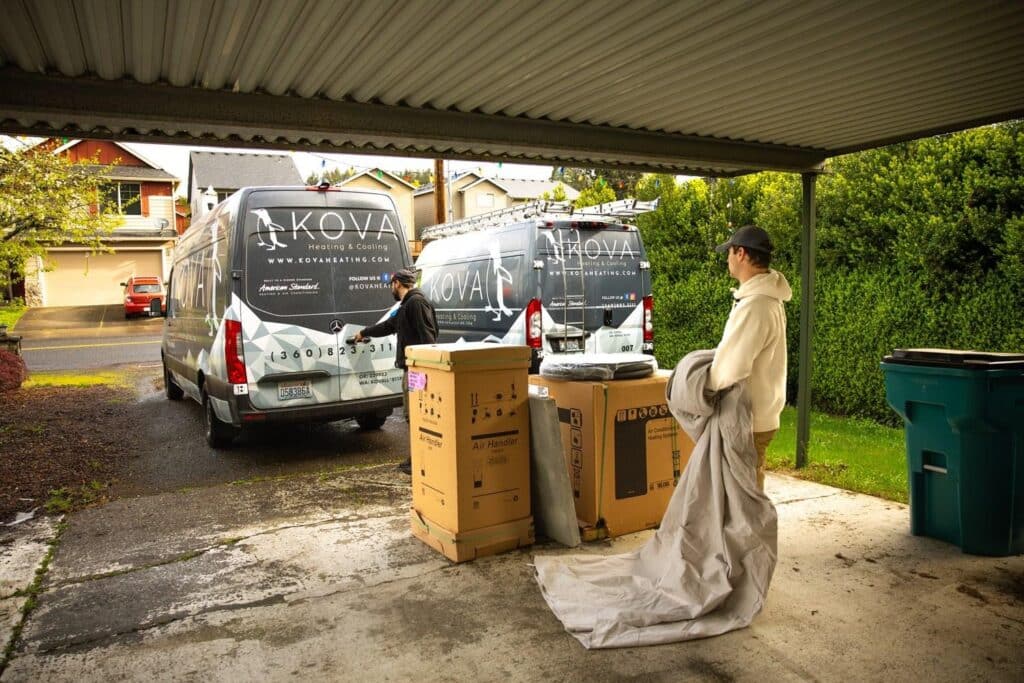
Kova project photo: equipment staged for a residential HVAC installation.
Quick Answer: What Impacts AC Installation Cost?
AC installation cost is shaped by more than the outdoor unit. The size of the home, the condition of the ductwork, the efficiency rating of the equipment, access to the installation area, electrical readiness, permit requirements, and whether the home needs a full central air retrofit can all change the scope of work. A simple replacement of an existing central air conditioner is usually more straightforward than adding cooling to a home that never had it.
That is why homeowners should be careful with generic online averages. They can help set expectations, but they do not replace a real assessment or a good digital estimate. For a more useful starting point, try Kova’s free instant online pricing tool and then schedule a professional visit if the project looks like a fit.
For homeowners in Portland, Vancouver, Beaverton, Tigard, Lake Oswego, West Linn, Camas, and the surrounding metro area, AC installation cost is rarely just a comfort question. Homes across the region can be older, remodeled in stages, affected by tree shade, built with crawlspaces or attics, and exposed to a climate that swings from damp winter weather to increasingly noticeable summer heat. That is why a smart HVAC decision should account for the home, the ductwork, the electrical setup, the insulation, and the way the family actually uses the space. When Kova Heating & Cooling talks with a homeowner about AC installation cost Portland, the goal is not to push a one-size-fits-all answer. The goal is to help the homeowner understand the real options, the tradeoffs, and the practical next step.
Why This Topic Matters for Homeowners
HVAC decisions are often made under pressure. The system stops working, a room becomes uncomfortable, or a repair quote arrives when the homeowner was not planning for a major expense. Educational content helps homeowners slow the decision down and compare options based on comfort, safety, efficiency, and long-term value. The best HVAC content should answer the question the homeowner searched, but it should also help them understand what to ask before they approve work.
For Kova Heating & Cooling, the purpose of this guide is to give homeowners a clearer starting point before they request an estimate. The right HVAC solution should fit the home, the budget, and the way the family lives day to day. A homeowner who understands the basics is more likely to choose a system that solves the real comfort issue instead of only chasing the lowest number or the fastest temporary fix.
The Biggest Cost Factors Homeowners Should Understand
The first major factor is capacity. An air conditioner has to be sized to the home, not chosen by guessing or simply matching the old equipment. Oversized equipment can short cycle, create humidity problems, and wear out faster. Undersized equipment can run constantly and still fail to keep the home comfortable during peak heat.
The second factor is the existing system. If the furnace, blower, ductwork, drain line, pad, thermostat wiring, or electrical disconnect needs work, the project may involve more than placing a new condenser outside. That does not mean the project is bad; it means the estimate should reflect the full system that will actually deliver comfort.
The third factor is efficiency and comfort features. Higher-efficiency systems, variable-speed equipment, and better controls can cost more up front, but they may improve comfort, reduce noise, and lower energy use over the life of the system. A good estimate should explain the difference clearly so the homeowner can choose confidently.
- System size and cooling capacity
- Ductwork condition and airflow
- Electrical panel and disconnect requirements
- Efficiency rating and equipment tier
- Indoor equipment compatibility
- Permit, access, and installation complexity
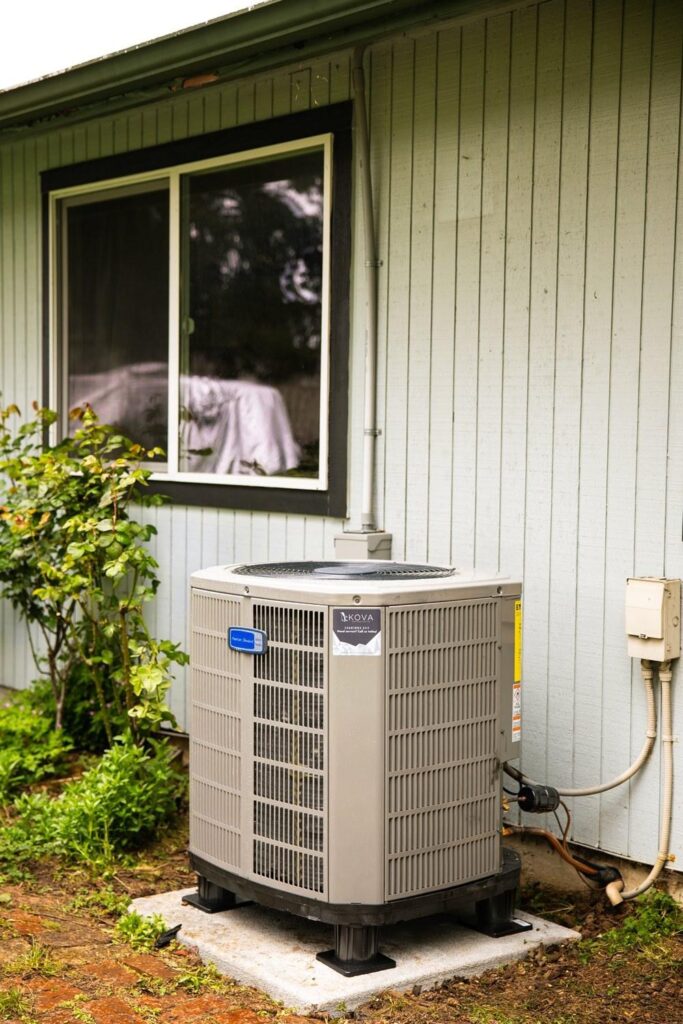
Kova project photo: newly installed outdoor comfort system.
Why Portland and Vancouver Homes Can Be Hard to Price Online
Greater Portland homes are not all built the same way. Some have newer duct systems and adequate electrical capacity. Others have older furnaces, additions, remodeled rooms, converted garages, or upstairs bedrooms that never cool evenly. Vancouver-area homes can have similar variety, especially when a system has been modified over the years.
That is why the lowest advertised number is not always the best value. A properly installed system should be designed to move enough air, remove humidity, protect the equipment, and keep the home comfortable on the hottest days. Kova’s team looks at the home as a full comfort system, not just a box outside the house.
If you are ready to compare options, Kova’s air conditioning installation and replacement services page is a natural next step for homeowners who want a professional recommendation instead of guesswork.
Replacement vs. Adding AC for the First Time
Replacing an existing AC system often means the home already has some of the required infrastructure. The project may still require upgrades, but the general pathway is clearer. Adding central air for the first time can be more involved because the home may need ductwork evaluation, electrical work, indoor coil compatibility, condensate drainage, and space planning.
For homes without central ductwork, a ductless mini split or heat pump may be a better fit than forcing central air into a home that was never designed for it. The right solution depends on the homeowner’s goals: whole-home comfort, cooling one problem room, improving an upstairs area, or adding year-round heating and cooling to a room addition.
Homeowners comparing central AC and ductless options can also review Kova’s heat pump services if they want a system that can heat and cool efficiently.
How to Make a Smart AC Installation Decision
The best estimate is the one that helps you understand the decision. Homeowners should know what equipment is being proposed, why it is the right size, whether the ductwork is adequate, what is included in the installation, and what kind of warranty or service support is available after the job is complete.
A strong contractor should also be transparent about what could increase the cost. For example, electrical upgrades, old refrigerant line issues, inaccessible equipment areas, or duct modifications should be discussed before the work begins. The more complete the conversation is up front, the less likely the homeowner is to be surprised later.
For a faster starting point, use Kova’s free instant online pricing tool to get a clearer idea of what AC installation cost may look like for your home before scheduling a full estimate.
- Ask whether the estimate includes both indoor and outdoor work.
- Confirm the system is sized for the home, not guessed from square footage alone.
- Ask what happens if duct or electrical issues are discovered.
- Compare comfort features, not just the lowest price.
- Choose a company that will stand behind the installation after the project is complete.
FAQs About AC Installation Cost
Is AC installation cheaper if I already have central air? Usually, yes, because the home may already have ducts, a thermostat path, an indoor air handler or furnace connection, and an outdoor location. However, old ductwork or incompatible equipment can still affect scope.
Should I repair my AC or replace it? If the system is newer and the repair is minor, repair may make sense. If the unit is older, uses outdated components, has recurring problems, or cannot keep up, replacement may be more practical.
Does financing change the project cost? Financing does not change the equipment or labor needed, but it can make replacement easier to budget. Kova’s financing page can help homeowners understand available options before deciding.
Homeowner Planning Checklist
Before making a final HVAC decision, write down the rooms that feel uncomfortable, the age of the existing system, recent repair history, energy bill concerns, airflow complaints, and any upcoming home changes. This helps the technician understand the real problem instead of focusing only on the equipment. The more specific the homeowner can be, the easier it is to recommend a system that solves the right issue.
Photos of the indoor equipment, outdoor unit, thermostat, electrical panel, and problem rooms can also help start the conversation. They will not replace an in-home evaluation, but they can help the team prepare and explain likely options.
- Note which rooms are too hot or too cold.
- Check the age of current equipment if available.
- List recent repairs or recurring problems.
- Think about whether the goal is repair, replacement, efficiency, or comfort.
- Ask for a clear explanation of what is included in the estimate.
Mistakes to Avoid Before You Decide
The most common mistake is treating HVAC as a commodity. Two estimates may both say AC, heat pump, furnace, or mini split, but the actual scope can be very different. One estimate may include electrical coordination, proper equipment matching, airflow evaluation, startup testing, and cleanup. Another may leave important items vague. Homeowners should ask what is included, what is excluded, and what could change once the project starts.
Another mistake is waiting until the system fully fails. Emergency replacement usually creates more stress and fewer choices. Planning ahead gives the homeowner time to compare options, understand financing or specials, and choose equipment based on comfort goals rather than panic. Even when a repair is the right move, a clear replacement plan can help the homeowner avoid being surprised later.
Finally, do not ignore the home itself. Insulation, ductwork, airflow, thermostat location, electrical capacity, and room layout all influence results. A quality HVAC recommendation should explain how the proposed system will interact with those details. That is where a local company familiar with Portland and Vancouver homes can provide real value. Taking a little extra time to diagnose the home up front can prevent years of weak airflow, hot rooms, noisy equipment, short cycling, high utility bills, and avoidable service calls.
- Do not compare estimates without comparing scope.
- Do not assume bigger equipment automatically means better comfort.
- Do not ignore ductwork, airflow, electrical, or control issues.
- Do not wait for a full breakdown if the system is already showing signs of decline.
- Do not choose a system before the home and comfort goals are evaluated.
Final Takeaway
AC installation cost in Portland and Vancouver depends on the home, the equipment, and the quality of the installation. The smartest move is to avoid relying on broad averages alone and instead get a project-specific starting point. If your current system is struggling or you are ready to add cooling, Kova Heating & Cooling can help you compare practical options and plan the next step.
Suggested Call to Action
Want a fast starting point for your project? Use Kova’s free instant online pricing tool or contact the team to schedule a professional estimate.
Internal Links Used / Recommended
- Kova Home
- AC Installation & Replacement
- AC Repair
- Heat Pump Services
- Furnace Replacement & Installation
External Sources
- Department of Energy – Central Air Conditioning
- ENERGY STAR – Central Air Conditioners
- Kova – AC Installation & Replacement
Publishing QA Notes
- Confirm Rank Math focus keyword is entered exactly as shown above.
- Set the first embedded project photo as the featured image unless a better project image is available.
- Proofread final copy inside WordPress after pasting into Elementor.
- Test all internal links and external source links before publishing.
- Assign a real author profile instead of Admin and add the suggested category/tags.